
Solar
How Weather Really Affects Solar: Clouds, Heat and Hail
Cloudy days still generate, hot days generate less than you would think, and hail is rarer a problem than the headlines suggest. Here is what weather actually does to your panels.
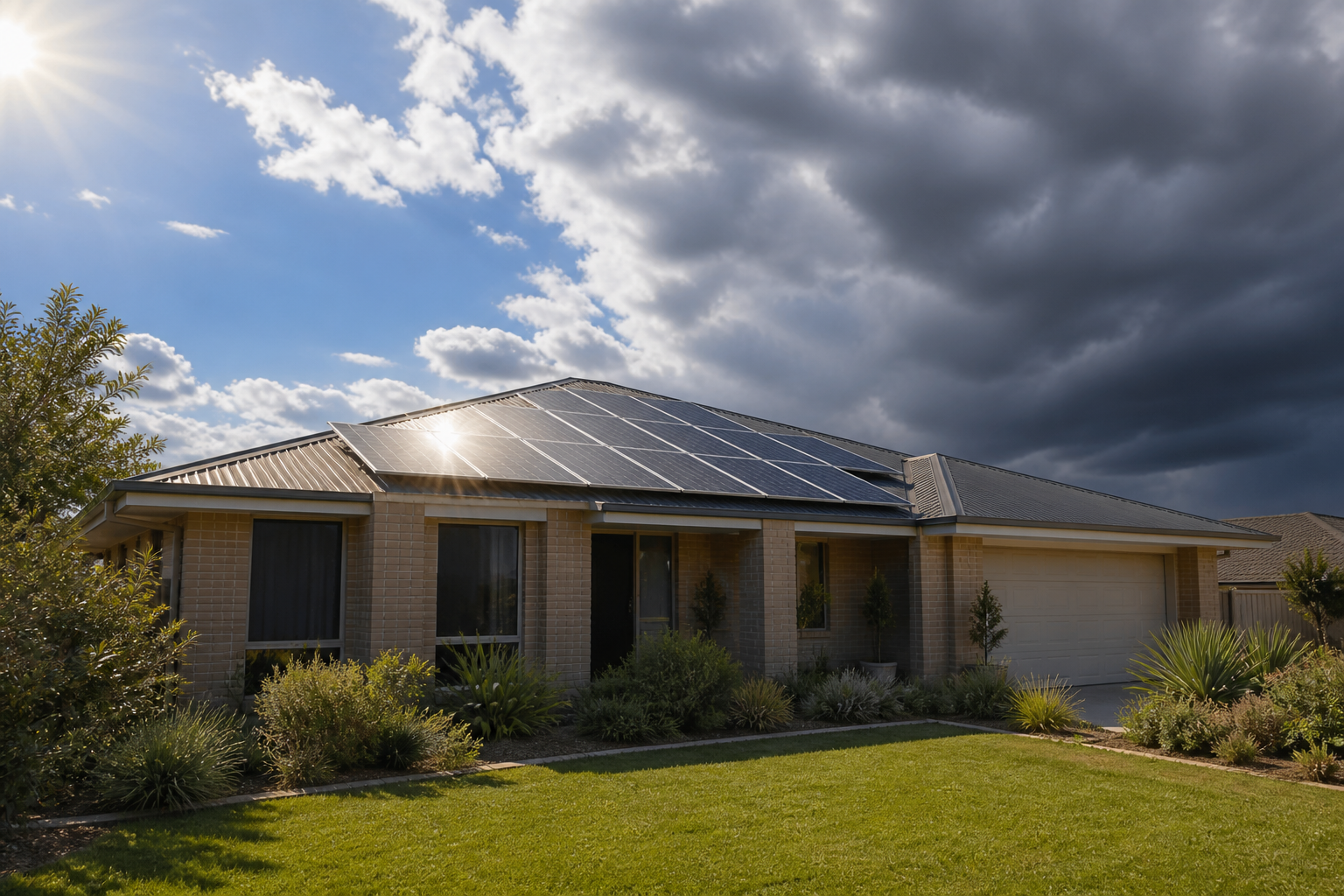
Ask ten people how weather affects solar and you will hear ten confident, mostly wrong answers. The real picture is more interesting: clouds are not the disaster people imagine, heat is a bigger thief than anyone expects, and hail — the scariest-sounding threat — is the one modern panels are best prepared for.
Clouds dim, they do not switch off
Panels run on light, not on blue sky. Under a bright overcast sky a system typically still produces a meaningful share of its clear-day output, because plenty of diffuse light gets through. Heavy, dark storm cloud cuts generation much harder, but even then the system keeps ticking over. What matters financially is the yearly average, not any single grey week — and system estimates already assume your local climate, cloudy winters included. A run of dull days in July is not a fault; it is exactly what the payback maths expected.
Heat: the counter-intuitive one
Most people assume a scorching 40-degree day is a solar jackpot. In fact, panels lose efficiency as they get hot — typically a fraction of a percent for every degree above their 25-degree test rating, and a panel in full summer sun runs far hotter than the air around it. The best generation days are actually mild and brilliantly clear: a sunny 24-degree spring day will often beat a heatwave. This is also why decent airflow under the panels matters, and why a good installer leaves the gap that lets breeze do its job.
Hail: engineered for, and insurable
Quality panels are certified against impact testing that fires ice balls at them at highway speeds, and the tempered glass shrugs off the hail most storms deliver. Truly giant hail can damage anything — roofs, cars and panels alike — which is why your system should be listed on your home insurance. After any severe hailstorm, glance at the monitoring app: damage sometimes shows up as a drop in output before it is visible from the ground. Never climb up to inspect; a photo from the yard and a call to your installer is the safe route.
Wind, rain and the free clean
Installed to Australian standards, racking is engineered for serious wind loads, so storms are rarely a structural worry. Rain, meanwhile, is quietly your friend — a decent downpour washes away the dust and pollen that would otherwise shave a few percent off output. In most suburbs, rain does the panel cleaning for free; it is only homes near heavy traffic, construction or lots of birds that benefit from an occasional professional clean.
The takeaway: weather causes swings, not surprises. Design for the yearly average, watch the app after extreme events, and let the climate do what the forecast said it would.